USEV on Collaboration and Sustainability

3 min read
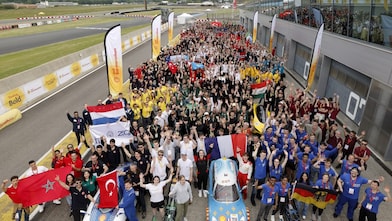
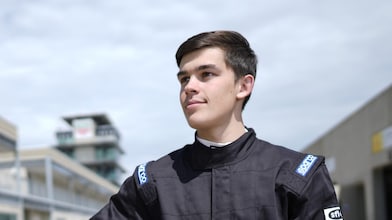
Meet Charlie, Team Manager of USEV from the University of Strathclyde, Scotland who believes collaboration is the key to innovation in the future.
Charlie and his team focuses on designing their vehicle as sustainably as possible. They do this because they understand that majority of a product’s environmental impact happens in the design phase.
They also believe that scientists, engineers, businesses, and even legislation all have a role in implementing innovative and sustainable practices.
Watch the video below to hear more from Charlie.
Charlie WilsonTo make progress on sustainability, we all need to work together.
Read the Transcript
Read the Transcript
Title: Shell Eco-marathon: On-Track EUAF 2023 – USEV
Duration: 03: 21
Description: USEV team manager Charlie Wilson discusses sustainability
USEV – Accessibility Transcript
[Background music]
Soft, slow-building music plays.
[Visuals]
Open with Charlie, full frame,
Charlie:
People think engineers will provide solutions to the world's problems, but collaboration is key.
[Text displays]
Engineers will provide solutions to the world’s problems
but collaboration is key
[Visuals]
Cuts to shot of vehicle running on track, before cutting to team members standing behind vehicle.
[Text displays]
USEV
University of Strathclyde
Scotland
Charlie voice-over:
We’re USEV from the University of Strathclyde in Scotland.
[Visuals]
Cuts back to Charlie.
[Text displays – name strap]
Charlie Wilson
Team Manager
Charlie:
Sustainability is the greatest challenge of our time. It affects everyone and whether you're young or old, whatever discipline you're in…
[Visuals]
Cuts to team members working on vehicle, followed by three-way split screen of vehicle and team member close up.
Charlie voice-over:
… and we really need to be working towards it because we've got the technology. We just need to implement it and actually work together…
[Text displays]
Work together
[Visuals]
Cuts back to Charlie after he appears in a separate window.
Charlie:
… to make sure that everything can work for future generations.
[Text displays]
Future generations
[Visuals]
Cuts to montage of team members talking in garage, before cutting back to Charlie.
Charlie:
The European Commission found that 80% of a product's environmental impact comes from the design phase.
[Text displays]
80% of a product’s environmental impact comes from the design phase
[Visuals]
Cuts to team members working on vehicle, followed by three-way split of two team members, a close up of soldering, and a remote control device.
Charlie voice-over:
So it's really important that we consider it early on in that design phase and make sure we…
[Visuals]
Cuts back to Charlie.
Charlie:
… integrate sustainability into everything we do as product designers…
[Text displays]
Integrate sustainability
[Visuals]
Cuts to team members trackside.
Charlie voice-over:
… by designing things[?], we can make better products…
[Visuals]
Cuts back to Charlie.
Charlie:
… that are sustainable and work long term.
[Visuals]
Wipe transitions to scrapbook cutouts, including images of a world map, team members and their vehicle.
[Visuals]
Cuts to shot of vehicle running on track, before cutting back to Charlie.
Charlie:
As product design engineers, we quite often use something called a lifecycle analysis…
[Text displays]
Lifecycle analysis
[Visuals]
Cuts to team members working on vehicle, before cutting back to Charlie.
Charlie:
… when we're looking at a product and how sustainable it is. It's essentially where you look at a product in often five different stages…
[Visuals]
Cuts to three-way split screen of team member close ups and someone moving wires. Then cuts back to Charlie.
Charlie:
So those could be getting the raw materials, manufacturing of the parts, transport and packaging, the product life and then the end of life.
[Text displays]
Raw materials
Manufacturing parts
Transport and packaging
Product life
End of life
[Visuals]
Cuts to three-way split screen of driver’s face, hands and the steering wheel, followed by shot of vehicle being rolled outside garage, and a team member working on laptop trackside.
Charlie voice-over:
And at each one you see how much of something is consumed. So for example, it could be energy like we look at in the Shell Eco-marathon competition
[Visuals]
Cuts back to Charlie.
Charlie:
Next year we're looking at updating our vehicle. So we will have a chassis and a shell which we won't have use for…
[Visuals]
Cuts to vehicle being rolled outside garage.
Charlie voice-over:
When this was originally designed, there wasn't an end of life plan. So we're looking at how we can get rid of this current car…
[Visuals]
Cuts back to Charlie.
Charlie:
… without it being unsustainable.
[Visuals]
Cuts to shots of team members talking in garage.
Charlie voice-over:
We're hoping to get in contact with one of our sponsors who have an innovation centre in Glasgow…
[Visuals]
Cuts back to Charlie.
Charlie:
… and display it there so it can inspire people in the future.
[Text displays]
Inspire people in the future
Charlie:
And they can see how students and young people are getting engaged with sustainability and electric vehicles.
[Visuals]
Wipe transitions to scrapbook graphic, including image of world map and cutouts of team members and vehicle on track.
[Visuals]
Cuts back to Charlie.
[Text displays]
To make progress on sustainability we all need to work together
Charlie:
To make progress on sustainability, we all need to work together, and that includes different disciplines.
[Text displays]
Scientists
Charlie:
There's things that scientists can invent and come up with that can then be utilised well by engineers in practical, real life situations.
[Text displays]
Engineers
[Visuals]
Cuts to vehicle rolling on track, followed by slow-motion shot of spectators.
Charlie voice-over:
But it doesn't just start with engineering. We need ways to bring this into society in a way that's economically viable through business…
[Text displays]
Business
[Visuals]
Cuts back to Charlie.
… and the businesses need to be supported and encouraged by legislation to actually implement sustainable practices.
[Text displays]
Legislation
Implement sustainable practises
[Visuals]
Cuts to three-way split screen of team members passing technical inspection.
Charlie voice-over:
I'd say I feel cautiously optimistic about the future.
[Visuals]
Cuts back to Charlie.
Charlie:
I can see that all the pieces of the puzzle to move towards a more sustainable future are there.
[Visuals]
Cuts to two-way split screen of the vehicle and Charlie, with racetrack underlay.
[Text displays]
Move towards a more sustainable future
[Visuals]
Cuts back to Charlie.
Charlie:
We just need to find ways to implement them and work together to get there.
[Visuals]
Cuts to rear-view shot of vehicles driving on track, before cutting back to Charlie.
Charlie:
Visit our playlist for more stories from Shell Eco-marathon.
[Text displays]
#ShellEcoMarathon
[Shell endboard with logo]
Subscribe for more
#ShellEcoMarathon
©SHELL INTERNATIONAL LIMITED 2023